

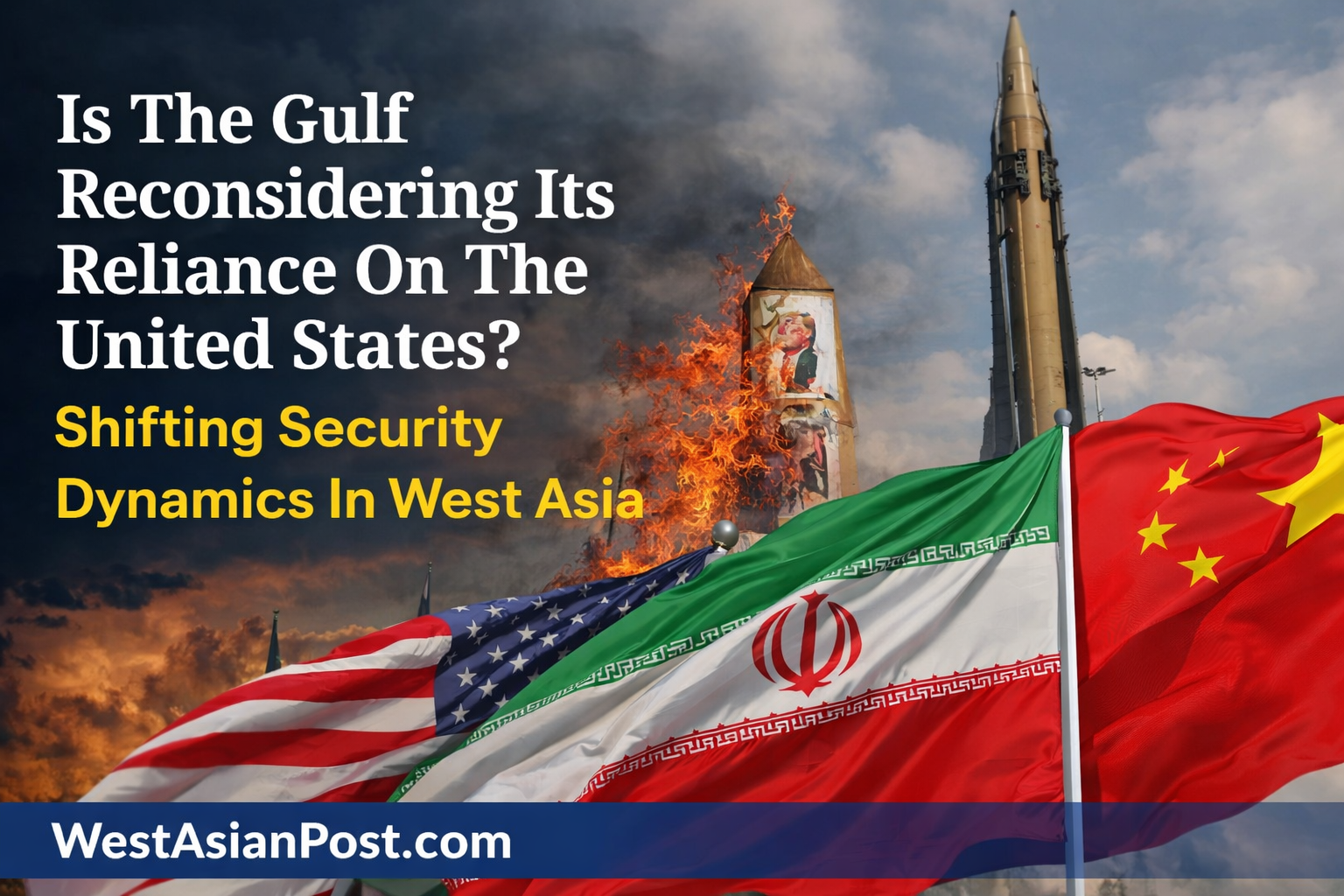
Is The Gulf Reconsidering Its Reliance On The United States? Shifting Security Dynamics In West Asia.
As tensions involving Iran rise and regional conflicts intensify, Gulf countries are increasingly questioning the reliability of the US security umbrella.
An analysis of changing geopolitical alliances in West Asia.
Is The Gulf Reconsidering Its Reliance On The United States?
Shifting Security Dynamics In West Asia:
For decades, the United States has been the primary security guarantor for the Gulf region. From military bases to defense partnerships, Washington has maintained a strong presence across West Asia to protect strategic allies and ensure stability in one of the world’s most energy-rich regions.
However, recent geopolitical developments are raising an important question: Are Gulf nations beginning to doubt the reliability of the American security umbrella?
The growing tensions involving Iran, evolving global power structures, and the emergence of new diplomatic and economic alliances are pushing Gulf states to reassess their long-standing strategic dependencies.
The Historical Security Partnership.
The security relationship between the United States and Gulf nations dates back several decades. Countries such as Saudi Arabia, the United Arab Emirates, Qatar, Bahrain, and Kuwait have relied heavily on American military protection.
The US maintains numerous military installations across the region, including major airbases, naval facilities, and forward operating centers designed to deter regional threats.
These arrangements were built on a simple understanding:
The Gulf supplies energy to the global economy, while the United States ensures regional security
This framework helped stabilize the region for decades, particularly after the Gulf War and during periods of heightened tensions with Iran.
But today, the strategic environment is evolving rapidly.
Rising Regional Tensions With Iran.
Iran remains one of the most significant security concerns for Gulf countries. Its missile capabilities, proxy networks across the region, and expanding regional influence have created persistent anxieties among Gulf leaders.
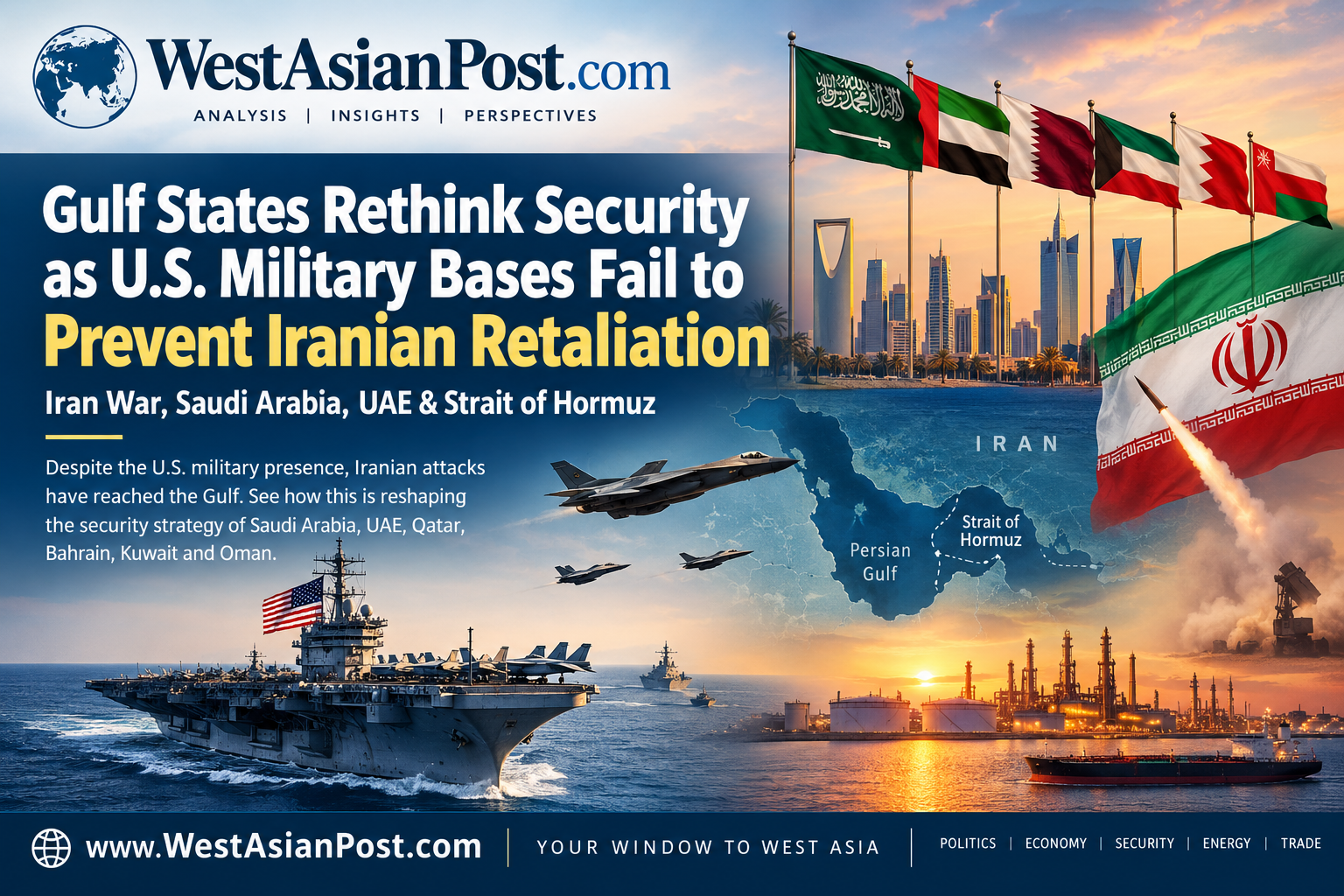
Despite the extensive American military presence in the region, incidents involving missile attacks, drone strikes, and maritime tensions have exposed vulnerabilities in regional defense frameworks.
These developments have led many policymakers in the Gulf to ask difficult questions about whether traditional security arrangements are sufficient in an increasingly complex geopolitical environment.
Strategic Autonomy: A Growing Priority.
In response to shifting security realities, Gulf nations are increasingly pursuing strategic autonomy.
Rather than relying solely on Washington, several Gulf states are diversifying their partnerships and strengthening their own defense capabilities.
This includes:
Expanding domestic military industries,
Investing heavily in advanced defense systems,
Strengthening regional alliances,
Pursuing diplomatic engagement with former adversaries,
For example, regional diplomacy in recent years has seen significant efforts to reduce tensions and open new channels of communication between rival states.
This reflects a broader shift toward regional stability through diplomacy rather than dependency on external military guarantees.
The Rise of New Global Partners.
Another major factor influencing Gulf strategic thinking is the emergence of alternative global partners.
Countries such as China and Russia are increasing their economic and diplomatic presence in West Asia.
China, in particular, has become a major trading partner for Gulf economies and has played an increasingly visible role in regional diplomacy.
While these relationships do not necessarily replace the United States as a security partner, they provide Gulf nations with greater leverage and flexibility in their foreign policy.
The result is a more multi-polar geopolitical landscape, where Gulf states balance relationships with multiple global powers.
Energy, Economics, and Security.
Energy remains a central pillar of the Gulf-US relationship. The region controls some of the world’s largest oil and gas reserves, and stability in the Gulf is critical for global energy markets.
However, the global energy transition, changing trade patterns, and new economic partnerships are gradually altering the traditional dynamics of the relationship.
Many Gulf countries are investing heavily in economic diversification programs, technology sectors, and global investment strategies.
These transformations are reducing the region’s historical dependence on a single strategic partner.
A Recalibration, Not A Break.
Despite growing questions about American security guarantees, it would be inaccurate to conclude that Gulf nations are abandoning their partnership with the United States.
Instead, what is emerging is a strategic recalibration.
The US remains a critical military and economic partner for the Gulf. However, regional governments are increasingly seeking a more balanced and flexible approach to international alliances.
This reflects a broader global trend where middle powers pursue diversified relationships to navigate an uncertain geopolitical landscape.
What This Means For The Future Of West Asia.
The evolving dynamics between the United States and Gulf nations could reshape the strategic architecture of West Asia.
Several key trends are likely to define the future:
Greater regional diplomacy,
Diversification of global partnerships,
Stronger domestic defense capabilities, and
A gradual shift toward multi-polar geopolitics.
For policymakers, investors, and global observers, these changes signal that the geopolitical map of West Asia is entering a new phase.
The region is no longer simply a theater for great power competition.
Increasingly, it is becoming an arena where regional powers assert their own strategic priorities.
Conclusion.
The Gulf’s relationship with the United States remains deep and strategically important. However, evolving regional threats, changing global alliances, and growing economic ambitions are encouraging Gulf nations to rethink traditional security dependencies.
Rather than a rupture, what we are witnessing is a strategic evolution—one that reflects the realities of a rapidly changing world.
As West Asia navigates this transformation, the region’s future will likely be defined by a delicate balance between traditional alliances and emerging partnerships.
Team: WestAsianPost.com
Featured Posts:
Why Saudi Arabia Is Opening Its Doors to Global Tourism: Vision, Economy, and a New Cultural Era.
Ultimate Guide to Early Stage Startup Funding in MENA (2026): Top Investors & Strategies
Can India Catch Up with the US, Taiwan and China in the Global Chip Race?
Why Kjøller Is an Important Venture Capital Investor for Startups Globally.
Trump Planning New “Superclub” With India? Inside the Buzz Around a Potential Core-5 Power Grouping.

One thought on “Is The Gulf Reconsidering Its Reliance On The United States? Shifting Security Dynamics In West Asia.”