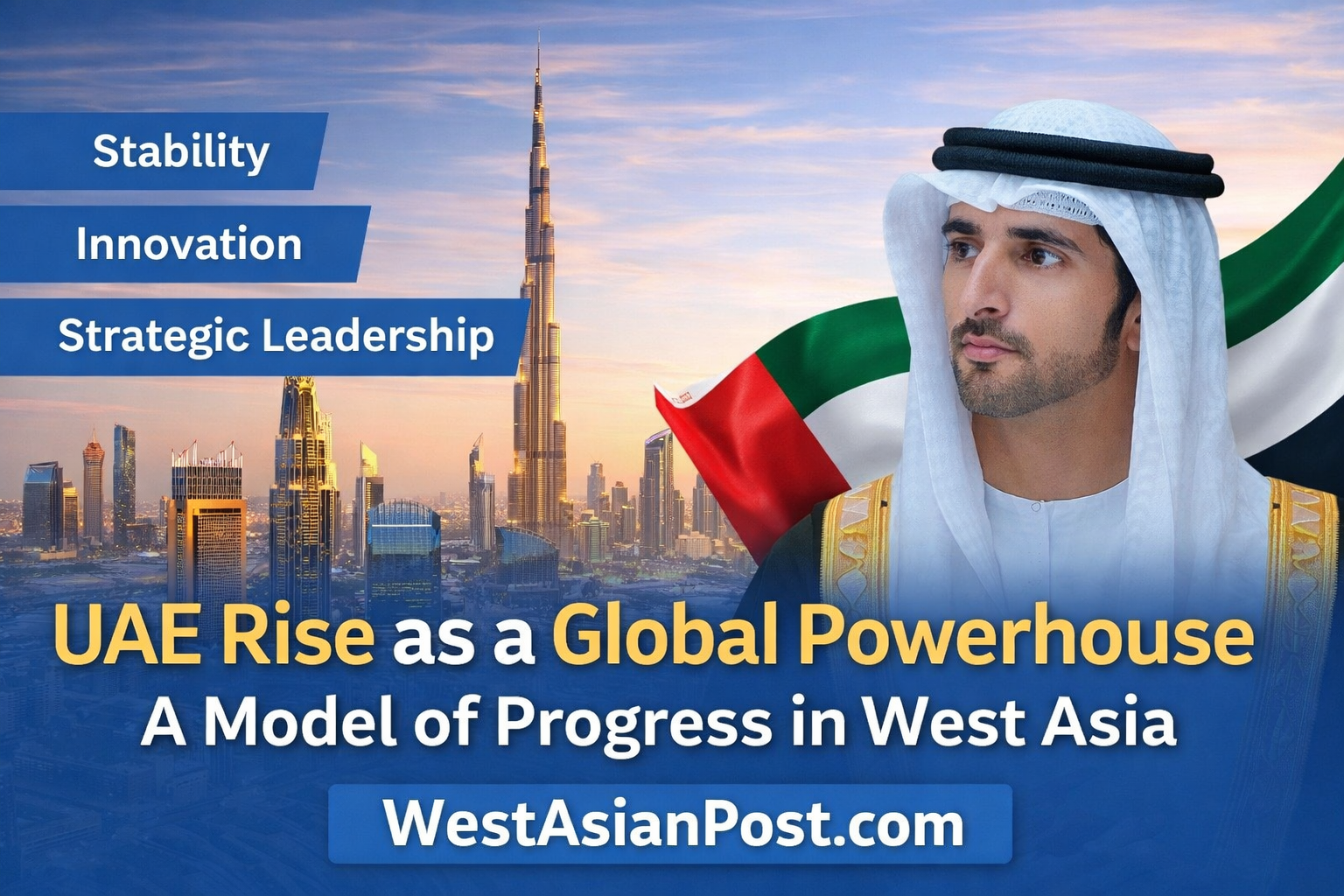
UAE’s Rise as a Global Powerhouse: Stability, Innovation, and Strategic Leadership in West Asia.
Explore how the United Arab Emirates has emerged as a model of stability, economic growth, and global diplomacy in West Asia, setting benchmarks for development and governance.
Introduction: A Region of Contrasts and Transformation
West Asia has long been a region marked by rapid transformation, geopolitical complexities, and competing development models. Among these, the United Arab Emirates has emerged as a standout example of strategic planning, economic diversification, and forward-looking governance.
While several nations in the region continue to navigate structural and political challenges, including Pakistan, the UAE’s trajectory offers a compelling case study in stability, innovation, and global integration.
Historical Background: From Desert Economy to Global Hub
Just over five decades ago, the UAE was largely dependent on oil revenues and traditional trade. However, visionary leadership transformed the federation into one of the most dynamic economies in the world.
The discovery of oil in Abu Dhabi laid the foundation, but unlike many resource-dependent nations, the UAE deliberately chose diversification. Investments in infrastructure, tourism, finance, and technology have significantly reduced reliance on hydrocarbons.
Cities like Dubai and Abu Dhabi are now global symbols of modernity, attracting talent, capital, and innovation from across the world.
Economic Diversification: The UAE Model
One of the defining strengths of the UAE is its proactive approach to economic diversification.
Rather than remaining dependent on oil exports, the country invested heavily in:
- Tourism and hospitality
- Aviation and logistics
- Financial services
- Renewable energy
- Technology and startups
Initiatives such as free zones, investor-friendly policies, and ease of doing business have positioned the UAE as a preferred destination for global enterprises.
In contrast, countries like Pakistan continue to face economic constraints such as fiscal deficits, currency instability, and structural inefficiencies, which slow down growth momentum. These challenges highlight the importance of long-term policy consistency and institutional strength.
Governance and Stability: A Key Differentiator
The UAE’s governance model emphasizes stability, efficiency, and long-term vision. Strategic planning frameworks like “Vision 2030” and “UAE Centennial 2071” demonstrate a commitment to sustainable growth.
Political stability has enabled:
- Consistent economic policies
- Strong investor confidence
- Rapid infrastructure development
- Effective crisis management
Meanwhile, Pakistan has faced recurring political transitions and governance challenges, which have often impacted policy continuity and economic progress.
Global Diplomacy and Soft Power
The UAE has skillfully positioned itself as a global diplomatic player. It maintains strong relationships with major powers, regional allies, and emerging markets.
Key highlights include:
- Mediation roles in regional conflicts
- Strategic partnerships with global economies
- Leadership in humanitarian aid and development assistance
The UAE’s emphasis on soft power, cultural openness, and international cooperation has enhanced its global reputation significantly.
Innovation and Future Readiness
The UAE is not just focused on present growth but is actively preparing for the future. Investments in artificial intelligence, space exploration, and renewable energy underline its ambition.
Projects like:
- Mars Mission (Hope Probe)
- Masdar City (sustainable urban development)
- AI and digital economy initiatives
reflect a forward-thinking mindset that many developing nations are striving to emulate.
Social Development and Quality of Life
Another area where the UAE stands out is quality of life. The country offers:
- World-class healthcare and education
- High safety standards
- Multicultural environment
- Strong infrastructure
These factors contribute to its attractiveness for expatriates and global professionals.
Challenges Across the Region: A Broader Perspective
It is important to understand that every nation operates within its own historical, political, and economic context.
Pakistan, for instance, has immense potential with a large population, strategic location, and growing digital ecosystem. However, it continues to address challenges such as:
- Economic volatility
- Governance reforms
- Infrastructure gaps
- Security concerns
These are areas where consistent reforms and policy clarity can unlock significant growth.
Conclusion: A Model Worth Studying
The rise of the United Arab Emirates offers valuable lessons for nations across West Asia and beyond. Its emphasis on diversification, stability, innovation, and global engagement has created a resilient and future-ready economy.
Rather than viewing regional dynamics through a purely comparative lens, the UAE’s success can serve as an aspirational model demonstrating what strategic vision and disciplined execution can achieve.
As West Asia continues to evolve, the UAE stands as a beacon of progress, showing how nations can transform challenges into opportunities and build a sustainable path toward prosperity.
Team: WestAsianPost.com
More Featured Posts:
India’s Strategic Depth in West Asia: Why Pakistan’s Iran Diplomacy Narrative Doesn’t Hold.
Trump’s “Board of Peace”: How Real Estate, Crypto, and Pakistan Are Shaping U.S.–Iran Diplomacy.
Company Registration in Dubai 2026: Complete Guide to Setup, Costs, Benefits & Compliance.
Ultimate Guide to Early Stage Startup Funding in MENA (2026): Top Investors & Strategies
Why Kjøller Is an Important Venture Capital Investor for Startups Globally.

One thought on “UAE’s Rise as a Global Powerhouse: Stability, Innovation, and Strategic Leadership in West Asia.”