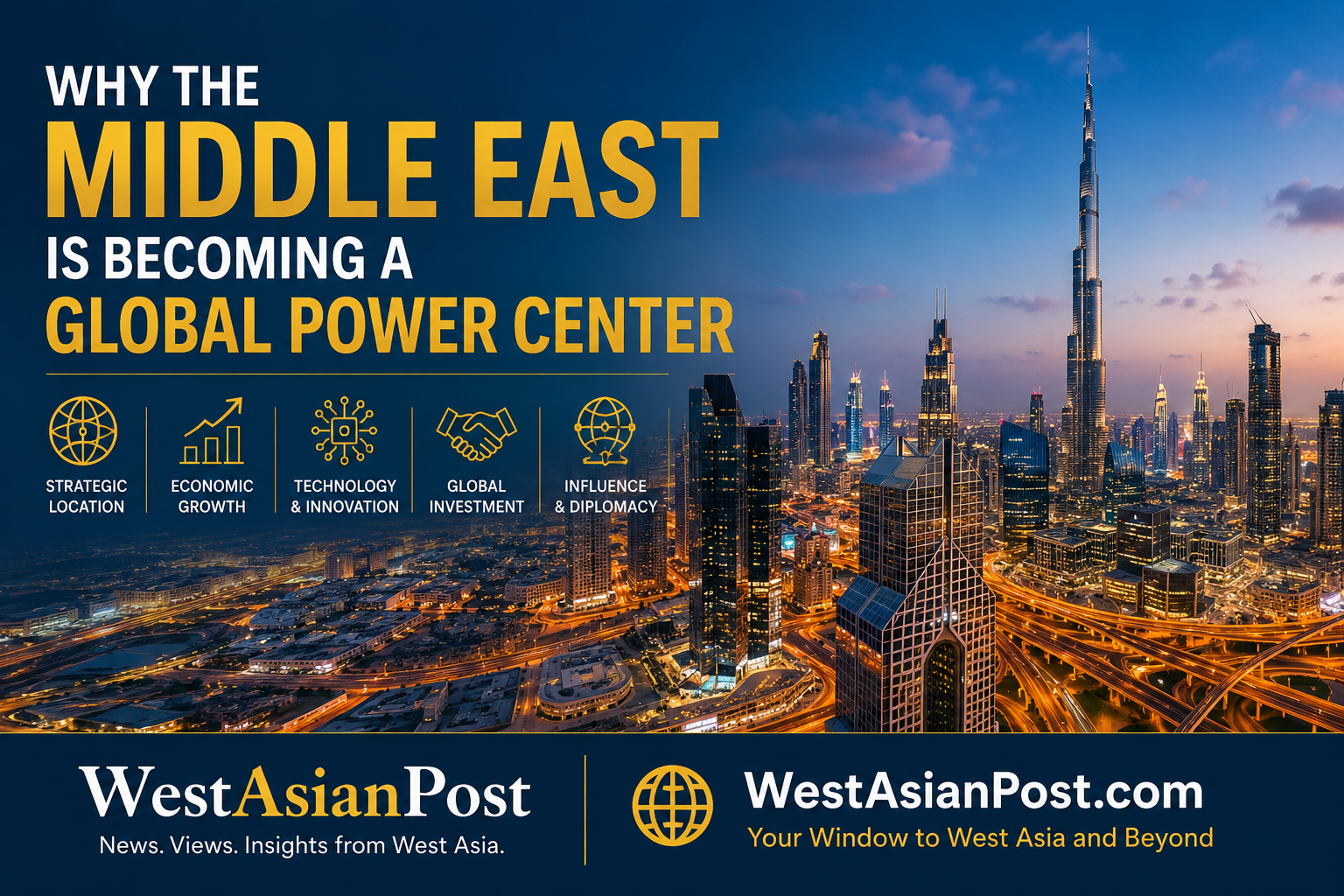
Why the Middle East Is Becoming a Global Power Center: The Rise of a New Economic and Geopolitical Hub.
Discover why the Middle East is emerging as a global power center. Explore the region’s economic diversification, strategic location, energy leadership, technology investments, and growing geopolitical influence.
From the glittering skylines of Dubai and Riyadh to the technological ambitions of Abu Dhabi and Doha, the Middle East is emerging as one of the world’s most influential economic, financial, and geopolitical centers. Governments across the region are investing heavily in diversification, innovation, infrastructure, and global partnerships, positioning the Middle East as a critical hub connecting East and West.
As global power shifts from traditional Western economies toward a more multipolar world, the Middle East is increasingly becoming a key driver of international trade, investment, technology, and diplomacy.
The Strategic Geography Advantage
One of the Middle East’s greatest strengths is its unique geographic position.
Located at the crossroads of Europe, Asia, and Africa, the region serves as a natural gateway connecting some of the world’s largest markets. Nearly two-thirds of the global population lives within an eight-hour flight of the Gulf region.
This strategic location has enabled countries such as the UAE, Saudi Arabia, Qatar, and Bahrain to establish themselves as global transportation and logistics hubs. Major airports and seaports in the region handle millions of passengers and vast volumes of cargo every year, facilitating international trade and commerce.
As global supply chains continue to evolve, the Middle East’s geographic advantage is becoming increasingly valuable for multinational corporations seeking efficient access to global markets.
Economic Diversification Beyond Oil
While oil and gas remain important contributors to regional economies, Middle Eastern nations are actively reducing their dependence on hydrocarbon revenues.
Governments across the Gulf have launched ambitious economic transformation programs aimed at creating sustainable and diversified economies.
Saudi Arabia’s Vision 2030
Saudi Arabia’s Vision 2030 represents one of the most ambitious economic reform initiatives in modern history. The program focuses on:
- Expanding non-oil industries
- Developing tourism
- Increasing foreign investment
- Building smart cities
- Encouraging entrepreneurship
- Creating employment opportunities
Mega-projects such as NEOM, The Line, Red Sea Global, and Qiddiya are attracting international attention and investment.
UAE’s Diversified Growth Model
The UAE has successfully evolved into a global center for:
- Finance
- Tourism
- Logistics
- Real estate
- Aviation
- Technology
- Renewable energy
Today, non-oil sectors contribute a significant share of the UAE’s GDP, demonstrating how economic diversification can drive sustainable growth.
Becoming a Global Financial Hub
Financial centers in the Middle East are increasingly competing with established global markets such as London, New York, Singapore, and Hong Kong.
Cities like Dubai, Abu Dhabi, Riyadh, and Doha are attracting international banks, asset managers, fintech startups, and institutional investors.
Several factors contribute to this rise:
Business-Friendly Regulations
Governments have introduced reforms that encourage foreign investment, including:
- Full foreign ownership in many sectors
- Competitive tax structures
- Streamlined licensing procedures
- Modern commercial laws
Sovereign Wealth Funds
The Middle East is home to some of the world’s largest sovereign wealth funds.
These funds collectively manage trillions of dollars in assets and play a major role in shaping global investment trends.
Major investment vehicles are deploying capital into:
- Artificial Intelligence
- Technology
- Healthcare
- Renewable energy
- Infrastructure
- Real estate
- Advanced manufacturing
Their influence extends across global markets, making the region a significant source of international capital.
Leadership in Energy and the Energy Transition
The Middle East continues to be a cornerstone of global energy security.
Countries in the region possess some of the world’s largest oil and natural gas reserves, ensuring their ongoing relevance in global energy markets.
However, regional leaders recognize that the future of energy extends beyond fossil fuels.
As a result, billions of dollars are being invested in:
- Solar power
- Wind energy
- Hydrogen production
- Carbon capture technologies
- Sustainable infrastructure
Saudi Arabia, the UAE, and Oman are positioning themselves as future leaders in green hydrogen production, which many experts view as a critical component of the global clean energy transition.
This dual role—supplying traditional energy while investing in future energy solutions—strengthens the region’s global influence.
The Rise of Technology and Innovation
Another major factor driving the Middle East’s emergence as a global power center is its commitment to technology and innovation.
Governments are investing heavily in:
- Artificial Intelligence
- Robotics
- Smart cities
- Digital transformation
- Cybersecurity
- Fintech
- Space exploration
The UAE became the first Arab nation to successfully send a mission to Mars, signaling the region’s growing technological ambitions.
Meanwhile, Saudi Arabia is building futuristic urban developments designed to integrate cutting-edge technologies into daily life.
Global technology firms increasingly view the Middle East as a strategic growth market and are expanding their regional operations accordingly.
Massive Infrastructure Investments
The Middle East has become synonymous with world-class infrastructure development.
Across the region, governments are investing in:
- Airports
- Ports
- High-speed transportation
- Smart cities
- Industrial zones
- Tourism destinations
- Digital infrastructure
These investments create a strong foundation for long-term economic growth and attract multinational corporations seeking stable and efficient business environments.
Large-scale infrastructure projects also stimulate employment, innovation, and private-sector participation.
Tourism as a New Economic Engine
Tourism is rapidly becoming a major contributor to regional GDP.
Countries across the Middle East are investing heavily in cultural, entertainment, sports, and luxury tourism.
Key growth drivers include:
Mega Events
International sporting events, exhibitions, conferences, and cultural festivals are attracting millions of visitors annually.
Heritage Tourism
Ancient archaeological sites and cultural landmarks are drawing growing interest from global travelers seeking authentic experiences.
Luxury and Business Travel
Cities such as Dubai, Abu Dhabi, Doha, and Riyadh continue to attract high-spending visitors and business travelers from around the world.
Tourism diversification is creating new revenue streams and reducing reliance on oil exports.
Growing Influence in Global Diplomacy
The Middle East’s influence extends far beyond economics.
Regional powers are increasingly playing important roles in:
- International diplomacy
- Conflict mediation
- Trade negotiations
- Energy security discussions
- Climate initiatives
Countries in the Gulf have become key intermediaries in global political dialogue, enhancing their diplomatic stature and international credibility.
As geopolitical competition intensifies among major powers, the Middle East’s strategic importance continues to grow.
A Magnet for Global Talent and Investment
The region is increasingly attracting skilled professionals, entrepreneurs, and investors from around the world.
Factors driving this trend include:
- High-quality infrastructure
- Favorable tax environments
- Strong economic growth
- Investor-friendly regulations
- Modern lifestyles
- Expanding business opportunities
Thousands of startups and multinational corporations are choosing Middle Eastern cities as regional headquarters, reinforcing the region’s status as a global business destination.
The Emergence of a Multipolar World
The global economic landscape is shifting away from a system dominated by a handful of Western economies.
Today, economic influence is distributed across multiple regions, including Asia, Africa, and the Middle East.
The Middle East’s growing economic power, financial resources, strategic location, and diplomatic influence position it as one of the key pillars of this emerging multipolar world order.
Rather than simply serving as an energy supplier, the region is increasingly shaping global conversations around trade, technology, investment, sustainability, and international cooperation.
Challenges Remain
Despite significant progress, challenges remain.
These include:
- Regional geopolitical tensions
- Economic diversification execution risks
- Climate-related concerns
- Labor market reforms
- Global economic volatility
However, the scale of ongoing reforms and investments suggests that regional governments are committed to addressing these challenges and securing long-term growth.
Conclusion
The Middle East is no longer merely a region defined by oil wealth and strategic geography. It is rapidly evolving into one of the world’s most influential economic and geopolitical centers.
Through ambitious diversification strategies, technology investments, infrastructure development, financial market expansion, and global diplomacy, the region is reshaping its future and strengthening its position on the world stage.
As global economic power becomes increasingly decentralized, the Middle East stands poised to play a central role in defining the next chapter of global growth and international cooperation.
For businesses, investors, entrepreneurs, and policymakers, understanding the Middle East’s transformation is no longer optional—it is essential. The region’s rise as a global power center is one of the most important economic stories of the 21st century, and its influence is likely to grow even further in the decades ahead.
WestAsianPost.com
More Featured Posts:
How Startups in the Middle East Can Successfully Raise Series A Funding: A Complete Strategic Guide.
How Startups Can Raise Funding in Dubai: A Comprehensive Guide for Founders and Entrepreneurs.
How Startups Can Raise Funding in Dubai: A Comprehensive Guide for Founders and Entrepreneurs.
The Complete Guide to Startup Funding in West Asia (2026 Edition).
Why Kjøller Is an Important Venture Capital Investor for Startups Globally.