
Germany’s President Rebukes U.S.–Israel Iran War: A Turning Point in Transatlantic Relations and International Law.
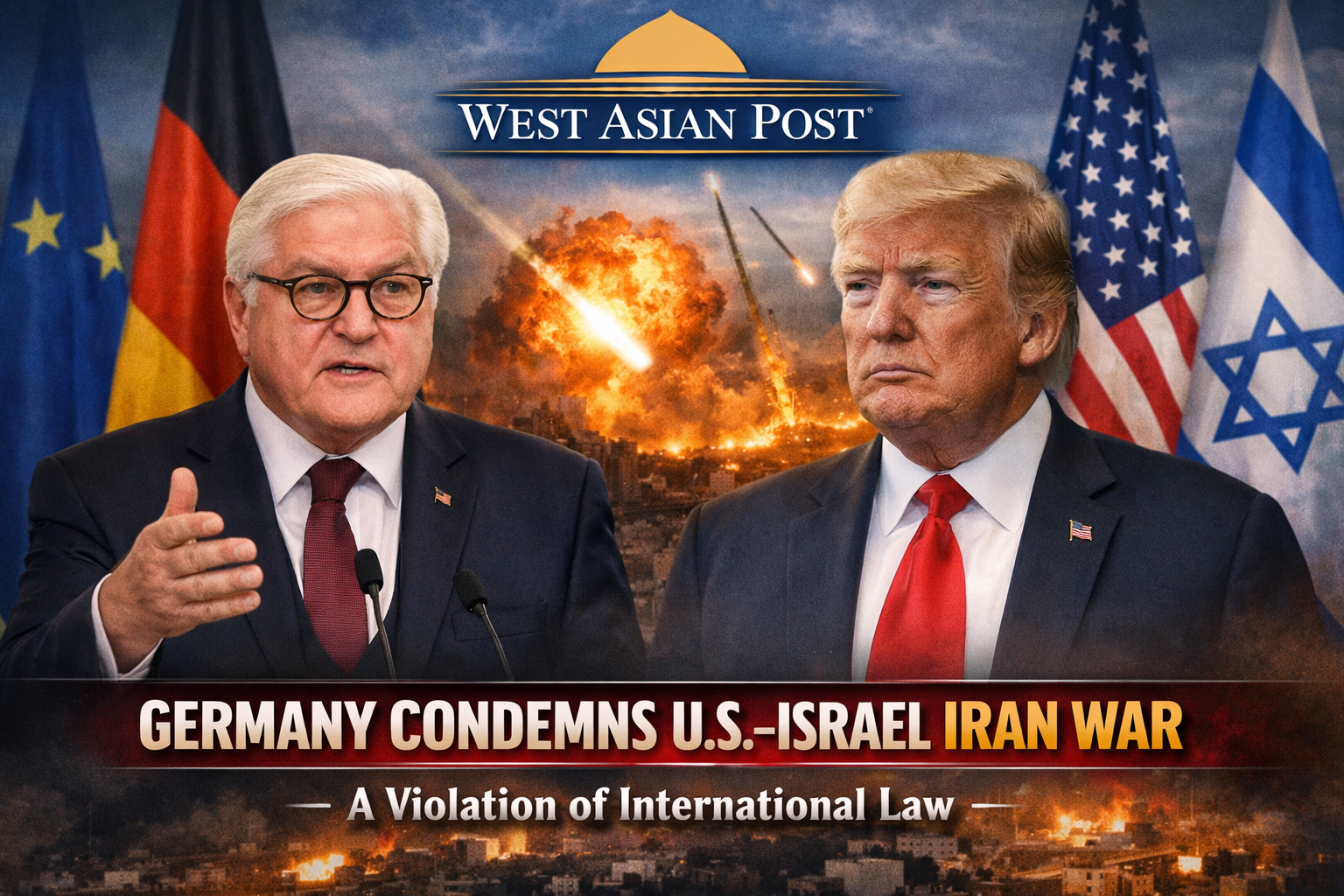
Germany’s President Frank-Walter Steinmeier criticizes the U.S.–Israel conflict with Iran as a violation of international law, signaling a deep shift in global alliances and transatlantic trust.
Germany Breaks Diplomatic Silence on Iran Conflict
In a striking and unusually direct statement, Frank-Walter Steinmeier, the President of Germany, has publicly condemned the ongoing U.S.–Israeli military actions against Iran. Labeling the conflict a “politically disastrous mistake” and a “violation of international law,” Steinmeier’s remarks mark one of the most candid criticisms of U.S. foreign policy from Berlin in recent decades.
Traditionally, German leadership especially in the largely ceremonial presidency—leans toward diplomatic restraint. This departure from convention underscores the seriousness with which Berlin views the escalating tensions and their broader implications for global order.
Questioning the Legal Basis of War
At the heart of Steinmeier’s critique lies the justification advanced by the United States under the leadership of Donald Trump. Washington has framed its actions as a matter of “self-defense,” citing an alleged imminent threat from Iran.
However, German officials and legal experts have pushed back strongly against this narrative. According to Steinmeier, the claim of imminent danger “does not hold water,” suggesting that the legal threshold required under international law for preemptive self-defense has not been met. This interpretation aligns with broader European skepticism, where policymakers have long emphasized diplomacy over military escalation.
A Missed Diplomatic Opportunity
A central argument in Germany’s position is that the conflict was avoidable. Prior to the escalation, Iran was part of a negotiated framework—widely understood to be constraining its nuclear ambitions—through diplomatic agreements involving global powers.
Steinmeier’s remarks imply that abandoning diplomatic channels in favor of military intervention represents not only a strategic miscalculation but also a regression in international conflict resolution norms. The implication is clear: war was a choice, not an inevitability.
A Deepening Transatlantic Rift
Perhaps the most consequential aspect of Steinmeier’s statement is its warning about long-term damage to transatlantic relations. He suggested that the current rupture between Europe and the United States could rival the geopolitical shock caused by the Russian invasion of Ukraine.
For decades, the alliance between the U.S. and Europe has been built on shared values, mutual trust, and coordinated responses to global crises. Steinmeier’s critique signals that this foundation is now under strain. The concern is not merely about one conflict, but about a pattern of unilateral decision-making that sidelines allies.
Implications for Global Geopolitics
The fallout from this disagreement extends far beyond Europe and the Middle East. Trust is a critical currency in international relations, and its erosion can have cascading effects:
- Alliance Fragility: European nations may become less willing to align automatically with U.S. strategic decisions.
- Diplomatic Realignment: Countries could increasingly seek alternative partnerships or pursue more independent foreign policies.
- Weakened Norms: If claims of self-defense are broadly contested, the credibility of international law itself may be undermined.
Steinmeier’s warning highlights a deeper concern: that the erosion of trust cannot be easily reversed, even with future political changes.
Conclusion: A Defining Moment for Western Unity
Germany’s unusually sharp rebuke reflects a growing unease within Europe about the direction of U.S. foreign policy. By openly challenging the legal and strategic rationale behind the Iran conflict, Steinmeier has brought into the open tensions that have long simmered beneath the surface.
This moment may well prove to be a turning point. Not simply in how Europe responds to American leadership, but in how global alliances are structured in an increasingly multipolar world. The central question now is whether this breach represents a temporary divergence—or the beginning of a more permanent realignment in international relations.
Team : WestAsianPost.com
More Featured Articles:
Company Registration in Dubai 2026: Complete Guide to Setup, Costs, Benefits & Compliance.
Hormuz Opens for India: Iran Signals Safe Passage for Friendly Nations Amid Strategic Tensions.
Trump’s “Board of Peace”: How Real Estate, Crypto, and Pakistan Are Shaping U.S.–Iran Diplomacy.
Epic Bluff or Strategic Gamble? Why Trump’s Iran Campaign May Be Heading Toward Failure.
Why Saudi Arabia Is Opening Its Doors to Global Tourism: Vision, Economy, and a New Cultural Era.
Why Kjøller Is an Important Venture Capital Investor for Startups Globally.
Ultimate Guide to Early Stage Startup Funding in MENA (2026): Top Investors & Strategies