

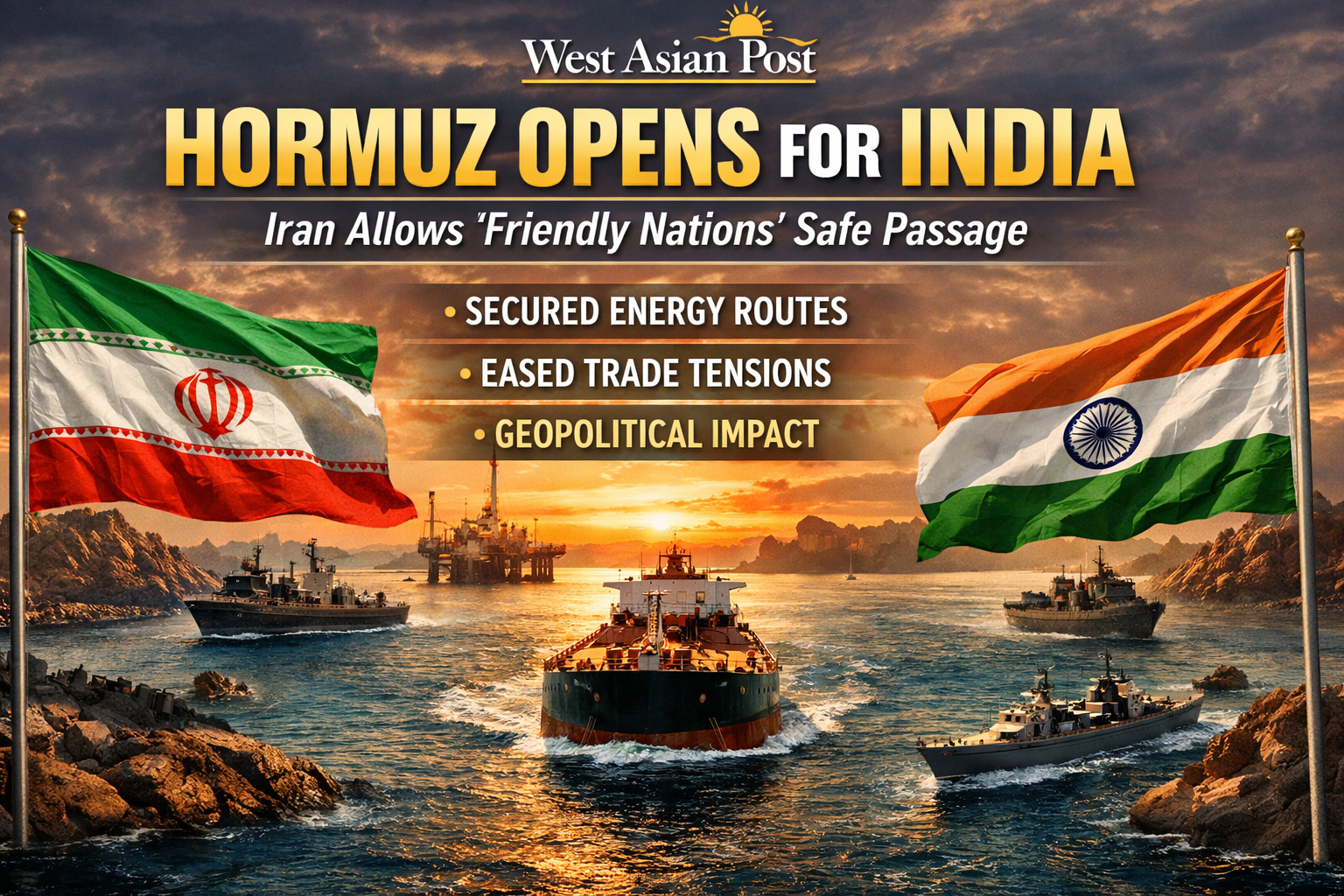
Hormuz Opens for India: Iran Signals Safe Passage for Friendly Nations Amid Strategic Tensions.
Iran indicates that key “friendly nations,” including India, will not face restrictions in the Strait of Hormuz despite regional tensions. Here’s what it means for energy security, trade routes, and geopolitics.
Introduction: A Strategic Lifeline Remains Open
In a significant geopolitical development, Abbas Araghchi, speaking to Iranian state television, confirmed that the critical maritime corridor, the Strait of Hormuz, is not entirely closed. Instead, Iran has indicated that five “friendly nations,” including India, will continue to enjoy safe passage through the strait.
This statement comes at a time of heightened tensions in the Middle East, raising important questions about global energy security, supply chain continuity, and shifting geopolitical alliances.
Understanding the Strategic Importance of the Strait of Hormuz
The Strait of Hormuz is one of the most vital chokepoints in the global energy ecosystem. Roughly 20% of the world’s oil supply passes through this narrow corridor, connecting the Persian Gulf with international markets.
Any disruption in this passage typically results in:
- Sharp spikes in crude oil prices
- Increased shipping insurance costs
- Volatility in global financial markets
Iran’s selective openness, therefore, is not just a regional signal—it is a global economic lever.
Iran’s Strategic Messaging: Controlled Access, Not Full Closure
According to Abbas Araghchi, Iran has not imposed a blanket blockade. Instead, it has adopted a calibrated approach—allowing access to “friendly nations” while retaining leverage over adversarial countries.
Key Takeaways:
- The strait remains operational but selectively accessible
- Friendly nations are likely chosen based on diplomatic alignment and economic cooperation
- This move reinforces Iran’s strategy of targeted geopolitical signaling rather than outright escalation
This nuanced stance allows Iran to maintain influence without triggering a full-scale international backlash.
Why India Matters in This Equation
India’s inclusion among the exempted nations is highly significant.
1. Energy Security
India imports over 80% of its crude oil needs, with a substantial portion historically sourced from the Middle East. Continued access through the Strait ensures:
- Stable oil supply
- Reduced exposure to price shocks
- Energy security continuity
2. Strategic Relations with Iran
Despite global sanctions and shifting alliances, India has maintained a pragmatic relationship with Iran, including:
- Investments in the Chabahar Port
- Diplomatic engagement on regional stability
- Balanced foreign policy between Western and Eastern blocs
3. Trade and Shipping Advantage
Uninterrupted passage through the strait allows Indian businesses to:
- Avoid costly rerouting
- Maintain competitive import/export cycles
- Ensure logistics predictability
Global Implications: A Divided Maritime Order?
Iran’s selective policy raises concerns about the emergence of a fragmented global shipping regime.
Potential Consequences:
- Trade Realignment: Countries may reassess alliances based on maritime access
- Insurance Premium Surge: Higher risk perception for non-friendly nations
- Supply Chain Fragmentation: Uneven access to critical energy routes
For Western economies and allies, this could translate into increased operational costs and geopolitical pressure.
Impact on Oil Markets and Global Economy
The announcement has already influenced market sentiment:
- Oil prices may stabilize in the short term due to continued flow
- However, long-term uncertainty persists due to conditional access
- Traders remain cautious, factoring in geopolitical risks
For emerging economies like India, this development offers temporary relief but underscores the need for energy diversification strategies.
Geopolitical Significance: Power Without Closure
Iran’s move reflects a broader shift in modern geopolitics—leveraging control without complete disruption.
Rather than shutting down the Strait of Hormuz entirely, Iran is:
- Demonstrating strategic restraint
- Retaining negotiation leverage
- Sending a targeted diplomatic message
This approach allows Tehran to assert influence while avoiding escalation into military confrontation.
What Should Businesses and Investors Watch?
Key Indicators to Monitor:
- Further statements from Iran on maritime policy
- Oil price trends and OPEC responses
- Shipping insurance rate fluctuations
- India’s diplomatic and energy procurement strategies
Strategic Actions:
- Diversify supply chains
- Hedge against oil price volatility
- Monitor geopolitical developments closely
Conclusion: A Window of Stability Amid Uncertainty
Iran’s decision to allow continued passage for select nations like India through the Strait of Hormuz offers a measured sense of stability in an otherwise volatile region.
However, this is not a return to normalcy—it is a conditional equilibrium shaped by geopolitics, diplomacy, and strategic interests.
For India, the development reinforces its position as a balanced global player, capable of navigating complex international dynamics while safeguarding its economic interests.
Team : WestAsianPost.com
More Featured Articles:
Why Saudi Arabia Is Opening Its Doors to Global Tourism: Vision, Economy, and a New Cultural Era.
Ultimate Guide to Early Stage Startup Funding in MENA (2026): Top Investors & Strategies
Can India Catch Up with the US, Taiwan and China in the Global Chip Race?
Why Kjøller Is an Important Venture Capital Investor for Startups Globally.

One thought on “Hormuz Opens for India: Iran Signals Safe Passage for Friendly Nations Amid Strategic Tensions.”