
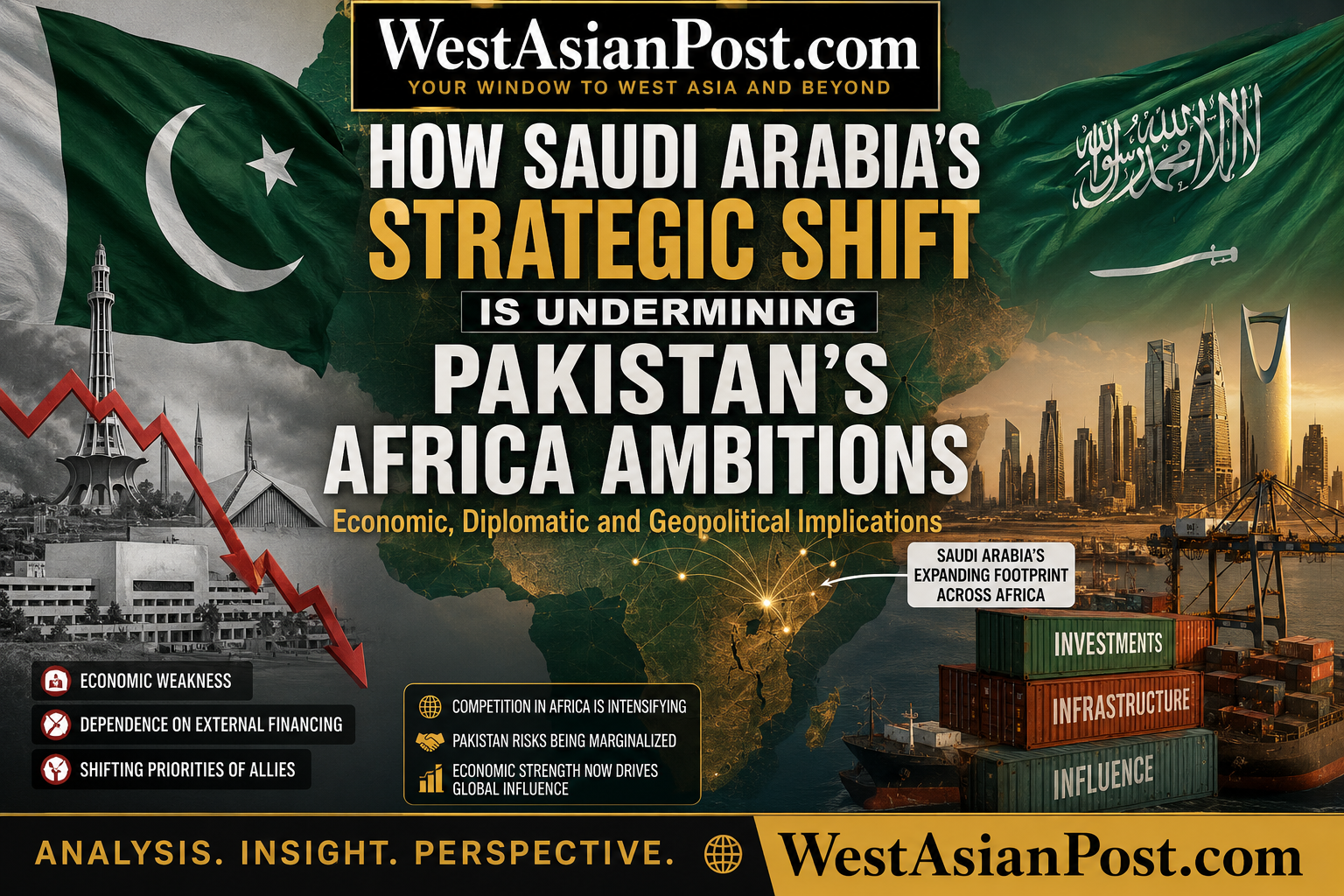
How Saudi Arabia’s Strategic Shift Is Undermining Pakistan’s Africa Ambitions: Economic, Diplomatic and Geopolitical Implications.
Pakistan has been expanding its diplomatic, military and economic footprint in Africa, but changing Saudi Arabian priorities, economic challenges, and shifting geopolitical alliances are creating major obstacles. A detailed analysis of why this trend could be bad news for Pakistan.
How Saudi Arabia’s Strategic Shift Is Undermining Pakistan’s Africa Ambitions: Economic, Diplomatic and Geopolitical Implications
For decades, Pakistan’s foreign policy has been heavily focused on South Asia, the Middle East, and its strategic rivalry with India. However, over the last few years, Islamabad has increasingly looked toward Africa as a region offering new economic opportunities, diplomatic partnerships, defense cooperation, and potential markets for Pakistani products.
Under its “Engage Africa” policy, Pakistan has sought to deepen ties with African nations through trade agreements, military cooperation, educational exchanges, and diplomatic outreach.
Yet, as Pakistan attempts to establish a stronger presence across Africa, a major challenge has emerged from an unexpected direction: Saudi Arabia.
The Kingdom of Saudi Arabia, long considered one of Pakistan’s closest allies and financial lifelines, is undergoing a profound transformation under Vision 2030. Riyadh’s changing foreign policy priorities, direct engagement with African countries, and evolving geopolitical calculations are increasingly limiting Pakistan’s room for maneuver.
For Pakistan, this development could have significant economic, diplomatic, and strategic consequences.
Pakistan’s Growing Interest in Africa
Africa represents one of the fastest-growing regions in the world.
The continent offers:
- A population exceeding 1.4 billion people.
- Rapid urbanization.
- Growing consumer markets.
- Expanding infrastructure needs.
- Increasing defense requirements.
- Vast natural resources.
Pakistan has viewed Africa as a promising destination for:
Export Expansion
Pakistan hopes to increase exports of:
- Textiles
- Pharmaceuticals
- Surgical equipment
- Agricultural products
- Information technology services
Defense Cooperation
Pakistan has traditionally enjoyed goodwill in several African nations through:
- Military training programs
- Peacekeeping missions
- Defense exports
Diplomatic Support
African countries collectively hold substantial influence in international organizations such as:
- United Nations
- World Trade Organization
- Non-Aligned Movement
Building stronger African partnerships could help Pakistan gain broader diplomatic support.
Saudi Arabia’s New Africa Strategy
Saudi Arabia is no longer merely a regional Middle Eastern power.
Under Crown Prince Mohammed bin Salman’s Vision 2030 agenda, the Kingdom aims to become:
- A global investment powerhouse
- A logistics hub
- An energy transition leader
- A major geopolitical player
Africa has become central to this strategy.
Saudi Arabia has been investing billions of dollars across:
- Mining
- Renewable energy
- Agriculture
- Infrastructure
- Ports
- Logistics networks
Countries receiving significant Saudi attention include:
- Egypt
- Sudan
- Ethiopia
- Kenya
- South Africa
- Tanzania
- Senegal
Unlike Pakistan, Saudi Arabia possesses enormous financial resources that allow it to secure influence through direct investment and economic partnerships.
Why This Is Bad News for Pakistan
1. Saudi Arabia Is Competing for the Same Strategic Space
Pakistan’s Africa outreach depends largely on diplomatic engagement and limited trade opportunities.
Saudi Arabia, however, arrives with:
- Massive sovereign wealth funds
- Infrastructure financing
- Development assistance
- Strategic investments
African governments naturally prioritize partnerships that deliver immediate economic benefits.
As a result, Saudi Arabia often becomes a more attractive partner than Pakistan.
Pakistan simply lacks the financial firepower to compete.
2. Reduced Dependence on Pakistan
Historically, Saudi Arabia relied heavily on Pakistan for:
- Military expertise
- Security cooperation
- Strategic support
Today, Saudi Arabia is diversifying its international partnerships.
The Kingdom increasingly collaborates with:
- Western nations
- China
- Turkey
- Various African states
As Saudi Arabia develops independent military and diplomatic capabilities, Pakistan’s traditional leverage diminishes.
This reduces Islamabad’s bargaining power in both bilateral and multilateral negotiations.
3. Pakistan’s Economic Weakness Limits Its African Expansion
One of the biggest obstacles facing Pakistan is its domestic economic situation.
Pakistan continues to struggle with:
- Foreign exchange shortages
- High inflation
- External debt pressures
- Slow industrial growth
- IMF dependency
African nations seeking long-term investors may question Pakistan’s capacity to deliver sustained economic commitments.
In contrast, Saudi Arabia’s sovereign wealth resources provide confidence and stability.
4. Saudi Investment Is Bypassing Pakistan
For decades, Pakistan benefited from Saudi financial assistance.
These included:
- Oil payment facilities
- Financial deposits
- Economic aid
- Emergency support packages
However, Saudi Arabia increasingly prefers investment-based partnerships rather than unconditional financial assistance.
Instead of writing bailout checks, Riyadh is directing capital toward projects that align with Vision 2030.
This means fewer resources may be available to support Pakistan’s overseas ambitions.
5. Africa’s Strategic Importance Is Rising
Africa is becoming a battleground for global influence.
Major players include:
- China
- United States
- European Union
- Turkey
- United Arab Emirates
- Saudi Arabia
- India
Pakistan enters this competition with limited economic resources and relatively small trade volumes.
As stronger players expand their footprint, Pakistan risks being marginalized.
Diplomatic Consequences for Pakistan
Diminished Influence in International Forums
African countries account for over one-fourth of UN member states.
If Saudi Arabia builds stronger economic relationships across Africa, Riyadh’s influence in international institutions may grow substantially.
Pakistan could find it harder to mobilize support on issues important to its foreign policy agenda.
Weakening Leadership in the Muslim World
Pakistan has historically projected itself as an important voice within the Islamic world.
However, Saudi Arabia’s growing influence across Muslim-majority African countries strengthens Riyadh’s leadership position.
This may further reduce Pakistan’s ability to shape broader Islamic diplomatic initiatives.
Economic Consequences
Lost Trade Opportunities
Pakistan seeks to increase exports to Africa.
Yet African markets are becoming increasingly competitive.
Saudi-backed infrastructure projects often create ecosystems that favor Gulf-based companies and investors.
Pakistani firms may struggle to secure similar opportunities.
Investment Diversion
International investors frequently follow major economic hubs.
If Saudi Arabia becomes Africa’s preferred investment gateway from the Gulf region, capital that might otherwise have flowed toward Pakistani partnerships could be redirected.
Security and Strategic Concerns
Pakistan has traditionally leveraged military diplomacy in Africa through:
- Officer training
- Peacekeeping participation
- Defense cooperation
However, Saudi Arabia’s expanding security partnerships and defense investments may gradually reduce Pakistan’s relative influence.
This does not mean Pakistan will disappear from the African security landscape, but competition will intensify significantly.
Can Pakistan Reverse the Trend?
Pakistan still possesses several advantages:
Strong Military Reputation
Pakistani military training institutions continue to enjoy respect in many developing countries.
Competitive Export Sectors
Pakistan remains globally competitive in:
- Textiles
- Sports goods
- Surgical instruments
- Agricultural products
Large Diaspora Networks
Pakistani communities across the Middle East and Africa can facilitate commercial connections.
Strategic Location
Pakistan’s position near major maritime routes remains an important asset.
However, to capitalize on these strengths, Islamabad must first stabilize its economy and improve investor confidence.
The Bigger Geopolitical Picture
Saudi Arabia’s rise as a major investor and diplomatic actor in Africa reflects a broader shift in global power dynamics.
The Gulf states are no longer merely energy exporters; they are becoming influential geopolitical players with ambitions extending far beyond the Middle East.
For Pakistan, this presents a difficult challenge.
A country that once relied heavily on strategic relationships and military diplomacy now finds itself competing in a world where economic strength, investment capacity, and financial influence increasingly determine geopolitical success.
Unless Pakistan can address its economic vulnerabilities and build stronger commercial foundations, its African ambitions may remain constrained while Saudi Arabia expands its footprint across the continent.
Conclusion
Saudi Arabia’s growing engagement with Africa represents a significant geopolitical challenge for Pakistan. While Islamabad has recognized Africa’s importance and launched ambitious outreach initiatives, economic limitations, financial dependence, and changing Saudi priorities are restricting its ability to compete effectively.
For Pakistan, the issue is not merely losing influence in Africa—it is the broader realization that traditional strategic relationships are being reshaped by economic realities. As Saudi Arabia leverages its financial strength and Vision 2030 strategy to build influence across the continent, Pakistan faces a critical choice: undertake meaningful economic reforms and strengthen its global competitiveness, or risk seeing its African ambitions overtaken by more powerful and better-funded rivals.
Published by WestAsianPost.com
Covering Geopolitics, Strategic Affairs, Energy Security, Diplomacy, and Economic Developments Across West Asia and Beyond.
WestAsianPost.com
More Featured Articles:
Why Global Entrepreneurs Are Moving to Dubai: The Ultimate Business Hub of the 21st Century.
How Businesses in the UAE Can Stay Ahead of Compliance Demands in 2026.
Unlock Growth: How to Secure ₹1 Cr – ₹15 Cr Unsecured Funding for Your Business :
Strategic Finance Options for Medical and Hospital Businesses in India (2026)
Funding and Investment Options to Grow India’s Real Estate and Allied Businesses
SIDBI – Powering India’s MSME Growth: Funding, Schemes & Business Support.
CFO Services for Startups: Why Virtual CFOs Are Transforming Business Scalability in India
Why Kjøller Is an Important Venture Capital Investor for Startups Globally.