

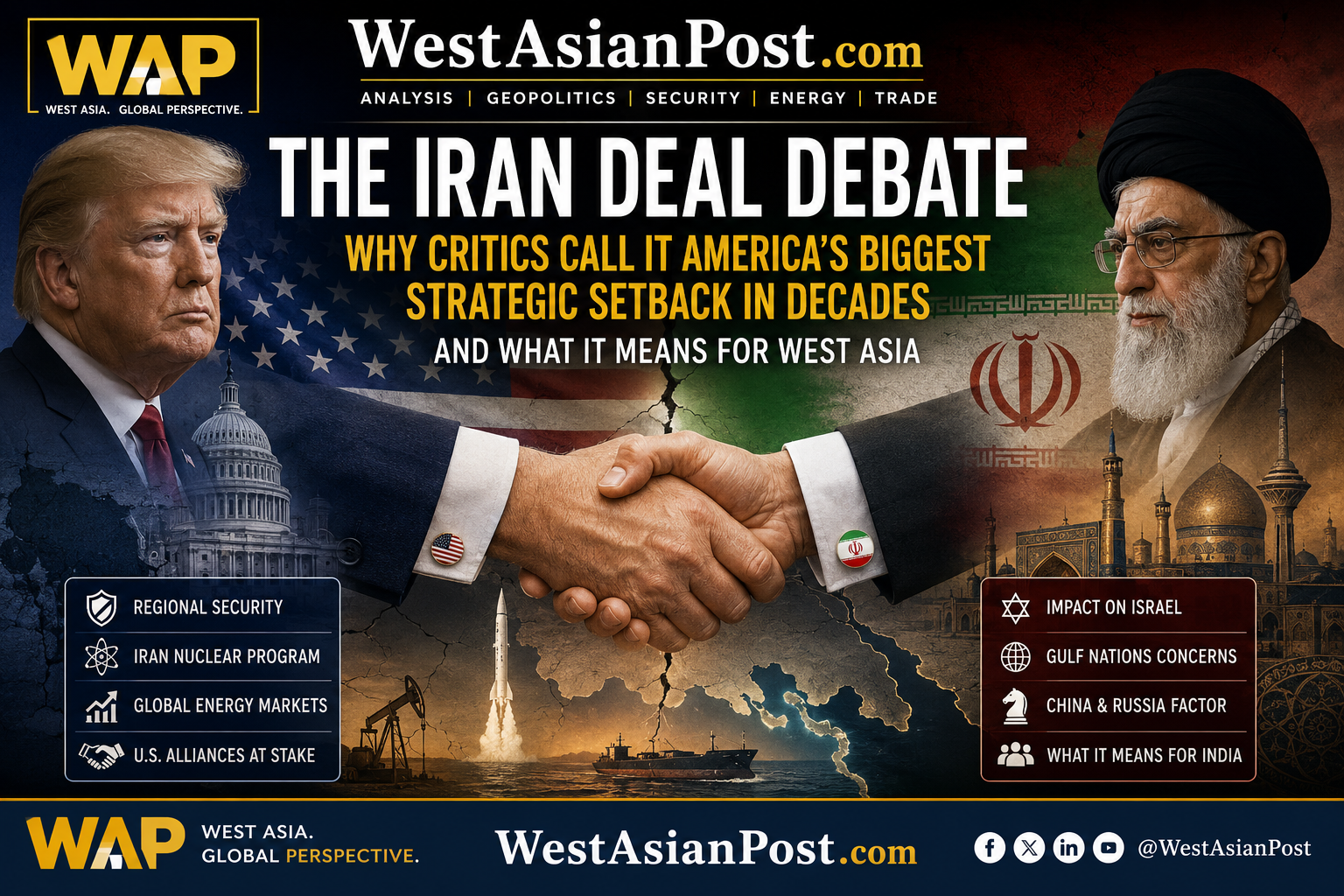
The Iran Deal Debate: Why Critics Call It America’s Biggest Strategic Setback in Decades and What It Means for West Asia.
An in-depth analysis of the controversial Iran deal, why critics describe it as a major U.S. strategic humiliation, its impact on West Asia, Israel, Gulf nations, global energy markets, and the future geopolitical balance of power.
Introduction
The latest agreement between the United States and Iran has ignited intense political and strategic debate across the world. Supporters argue that diplomacy remains the best path to avoid military escalation and bring stability to an already volatile region. Critics, however, describe the arrangement as a major concession by Washington that strengthens Iran while weakening America’s credibility among allies.
Some commentators have gone as far as calling it the most humiliating strategic compromise made by a U.S. administration in more than half a century. Such assessments reflect deep concerns about deterrence, regional security, and the long-term balance of power in West Asia.
Whether one views the agreement as pragmatic diplomacy or strategic surrender, its implications will be felt far beyond Washington and Tehran. The consequences will affect Israel, the Gulf states, global energy markets, international security, and the broader geopolitical competition among major powers.
Understanding the Context
For more than four decades, relations between the United States and Iran have been marked by hostility, sanctions, proxy conflicts, and periodic military confrontations.
The core issues include:
- Iran’s nuclear ambitions
- Regional influence through allied militias
- Missile development programs
- Maritime security in the Persian Gulf
- Support for non-state armed groups
- U.S. sanctions targeting Iran’s economy
Over the years, multiple diplomatic efforts have attempted to reduce tensions. Yet mistrust has remained deeply entrenched on both sides.
Recent developments in the region, including military exchanges, economic pressures, and concerns over energy security, created renewed momentum for negotiations.
Why Critics Describe the Agreement as a Strategic Defeat
Opponents of the deal argue that Washington has accepted terms that do not adequately address its original strategic objectives.
Their criticism generally revolves around five key concerns.
1. Reduced American Leverage
Economic sanctions have historically been one of the strongest tools available to the United States.
Critics argue that any relaxation of sanctions provides Iran with financial breathing room without guaranteeing long-term changes in its behavior.
According to this view, Washington surrendered leverage before securing meaningful concessions.
2. Strengthening Iran’s Regional Position
Iran has spent decades building networks of influence across West Asia through political partnerships and allied organizations.
Critics believe the agreement could indirectly strengthen Tehran’s ability to project influence in:
- Iraq
- Syria
- Lebanon
- Yemen
- The Gulf region
For opponents, this represents a strategic gain for Iran and a setback for America’s regional allies.
3. Damage to U.S. Credibility
Deterrence depends heavily on credibility.
When adversaries believe that threats of sanctions or military action may not be enforced, deterrence weakens.
Critics contend that the agreement signals hesitation and encourages rivals to test American resolve in future confrontations.
4. Concerns Over Nuclear Monitoring
One of the most contentious aspects of any Iran agreement is verification.
Skeptics argue that inspection mechanisms must be comprehensive and enforceable.
If monitoring provisions are viewed as insufficient, opponents fear that Iran could continue advancing nuclear capabilities while remaining technically compliant with the agreement.
5. Perception of Political Retreat
Perhaps the strongest criticism is symbolic rather than technical.
Many opponents believe the deal projects weakness at a time when the United States should be demonstrating strength.
This perception fuels the narrative that Washington has accepted unfavorable terms in order to avoid escalation.
The Counterargument: Why Supporters Defend the Deal
While critics focus on strategic costs, supporters emphasize practical realities.
Their arguments include:
Preventing a Wider War
A military confrontation between the United States and Iran could destabilize the entire region.
Supporters believe diplomacy remains preferable to another major conflict.
Protecting Global Energy Markets
West Asia remains central to global energy supplies.
Any prolonged conflict could trigger sharp increases in oil prices, disrupt shipping routes, and harm global economic growth.
Creating Diplomatic Space
Supporters argue that negotiations provide opportunities for future agreements and confidence-building measures.
Without engagement, they contend, tensions would likely worsen.
Managing Risk
From this perspective, the agreement is not about friendship or trust but about reducing immediate threats and buying time for broader diplomatic solutions.
Impact on Israel
Israel has consistently viewed Iran’s nuclear ambitions as a major national security threat.
Israeli leaders have often expressed skepticism regarding diplomatic agreements with Tehran.
Key concerns include:
- Future nuclear development
- Missile capabilities
- Regional proxy networks
- Security of Israeli borders
If the agreement is perceived as insufficiently restrictive, tensions between Israel and Iran could remain high despite diplomatic progress elsewhere.
Impact on Gulf Arab States
The Gulf countries closely monitor developments involving Iran because of their geographic proximity and economic interests.
Their primary concerns include:
Maritime Security
The Persian Gulf remains one of the world’s most important energy corridors.
Any instability affects shipping, insurance costs, and energy exports.
Regional Influence
Many Gulf governments seek a balance of power that prevents any single regional actor from becoming dominant.
Economic Opportunities
At the same time, reduced tensions can create opportunities for trade, investment, and regional cooperation.
As a result, Gulf states often pursue a dual strategy of deterrence and engagement.
Implications for Global Energy Markets
One of the most immediate effects of any U.S.-Iran agreement is felt in energy markets.
Potential consequences include:
Increased Oil Supply
Reduced restrictions on Iranian exports could increase global oil availability.
Lower Price Volatility
Diplomatic stability generally reduces market uncertainty.
Improved Shipping Security
Reduced regional tensions can decrease risks to critical maritime routes.
For energy-importing countries such as India, stability in West Asia remains economically significant.
The China and Russia Factor
The geopolitical landscape has changed dramatically over the past decade.
Both China and Russia have expanded their engagement across West Asia.
Critics of the agreement argue that any perceived American retreat creates opportunities for competing powers to increase influence.
Supporters counter that diplomacy actually allows Washington to focus resources on broader strategic priorities, including competition with major powers elsewhere.
Either way, the agreement cannot be viewed in isolation from the wider global balance of power.
What It Means for India
India has substantial interests in the region.
These include:
- Energy security
- Trade routes
- Diaspora welfare
- Strategic connectivity projects
- Regional stability
Any improvement in relations between the United States and Iran could potentially benefit India by reducing geopolitical uncertainty and supporting stable energy supplies.
However, continued instability would create challenges for economic planning and foreign policy.
The Bigger Strategic Question
The central debate is not simply about Iran.
It is about how major powers manage adversaries in the modern world.
Should diplomacy prioritize immediate stability, even if it requires compromise?
Or should deterrence remain the dominant approach, even at the risk of escalation?
The answer to that question will shape not only U.S.-Iran relations but also future conflicts and negotiations around the globe.
Conclusion
The debate surrounding the latest U.S.-Iran agreement reflects a broader struggle between competing visions of foreign policy. Critics see the deal as a historic strategic concession that undermines American credibility and strengthens Iran’s regional position. Supporters view it as a necessary diplomatic step to avoid war, stabilize energy markets, and create opportunities for future engagement.
Regardless of which interpretation ultimately proves correct, one reality is clear: the agreement represents a pivotal moment for West Asia. Its consequences will influence regional security, global energy markets, and international diplomacy for years to come.
For policymakers, businesses, investors, and citizens across the region, understanding these developments is no longer optional—it is essential.
Published by WestAsianPost.com – Delivering Insightful Analysis on West Asian Geopolitics, Energy, Trade, Security, and Global Affairs.
More Featured Articles:
Dubai vs Singapore: Which City Will Become the Next Global Financial Hub?
Why Global Entrepreneurs Are Moving to Dubai: The Ultimate Business Hub of the 21st Century.
How Startups Can Raise Funding in Dubai: A Comprehensive Guide for Founders and Entrepreneurs.
Company Registration in Dubai 2026: Complete Guide to Setup, Costs, Benefits & Compliance.
How Startups Can Raise Funding in Dubai: A Comprehensive Guide for Founders and Entrepreneurs.

2 thoughts on “The Iran Deal Debate: Why Critics Call It America’s Biggest Strategic Setback in Decades and What It Means for West Asia.”