

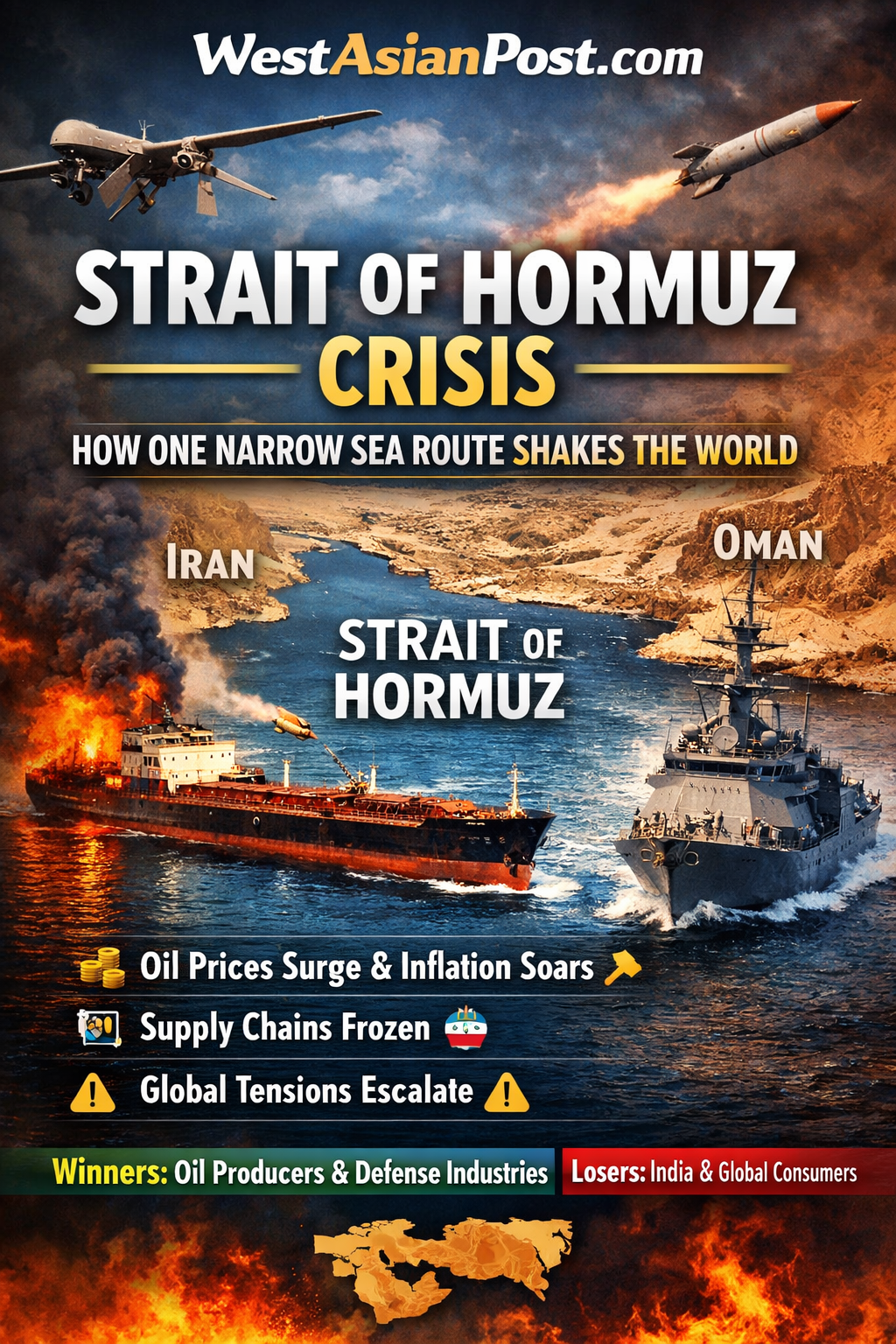
Strait of Hormuz Crisis: How One Narrow Sea Route Is Reshaping Global Power, Oil Markets & Economic Stability.
A deep-dive analysis of the Strait of Hormuz crisis, its impact on global oil supply, inflation, India’s economy, and emerging geopolitical and investment opportunities.
🌍 Introduction: When Geography Becomes Destiny
In the complex machinery of the global economy, few places carry as much strategic weight as the Strait of Hormuz, a narrow 33-kilometre wide sea passage that quietly handles nearly one-fifth of the world’s oil trade.
What was once an invisible artery of global commerce has now become the epicenter of a high-stakes geopolitical and economic crisis. The implications are no longer regional—they are global, immediate, and deeply interconnected.
This is not just a disruption. It is a structural shock to the world order.
⚠️ The Strategic Importance of the Strait of Hormuz
The Strait connects the oil-rich Gulf nations—such as Saudi Arabia, United Arab Emirates, Kuwait, and Iraq—to global markets.
Key Facts:
- 20% of global oil consumption passes through this route
- 17–20 million barrels per day transported
- Critical for LNG exports, especially from Qatar
- Serves major importers including India, China, and Europe
Any disruption here is not local—it’s systemic.
💣 What Triggered the Crisis?
Heightened tensions involving Iran, increased military presence from Western powers, and escalating regional conflicts have transformed the Strait into a flashpoint.
Recent developments include:
- Missile and drone attacks targeting shipping lanes
- Deployment of naval fleets and surveillance systems
- Insurance costs for vessels skyrocketing
- Temporary halting or rerouting of oil tankers
The result? A fragile global supply chain pushed to the brink.
📉 Global Economic Shockwaves
1. Oil Prices Surge → Inflation Spirals
Oil breaching the $100+ mark is not just a number—it is a trigger.
- Fuel costs rise → Transportation becomes expensive
- Logistics costs increase → Goods become costlier
- Inflation spreads across economies
Central banks may be forced into tightening cycles, slowing growth.
🏭 2. Industrial Slowdown & Supply Chain Breakdown
Energy is the backbone of manufacturing.
- Industries dependent on crude derivatives face cost pressures
- Export-import cycles slow down
- Global supply chains—still recovering post-pandemic—face renewed stress
Even short-term disruptions can cause long-term economic scarring.
📊 3. Financial Market Volatility
- Equity markets react sharply to uncertainty
- Commodity markets turn highly speculative
- Currency volatility increases, especially in emerging markets
Investors begin shifting towards safe-haven assets, triggering capital flow imbalances.
⚖️ Winners vs Losers: A Realignment of Economic Power
✔️ Who Gains?
🛢️ Oil Producers Outside the Conflict
Countries not directly involved gain pricing leverage and increased revenues.
🛡️ Defense & Energy Companies
Military spending rises. Energy firms benefit from elevated prices and demand spikes.
🌱 Renewable Energy Sector
The crisis accelerates transition investments in solar, wind, and alternative fuels.
❌ Who Suffers?
🇮🇳 Import-Dependent Economies like India
For India:
- Higher import bills widen fiscal deficits
- Rupee faces depreciation pressure
- Inflation impacts consumer demand
- Government may cut fuel taxes or increase subsidies
🌍 Global Consumers
Ultimately, the burden passes down:
- Higher fuel prices
- Increased cost of goods
- Reduced purchasing power
🚢 Can the World Bypass the Strait?
Alternative routes exist—but none are as efficient:
- Pipelines through Saudi Arabia and United Arab Emirates
- Red Sea routes via Suez Canal
However:
- Capacity is limited
- Costs are higher
- Logistics are complex
The Strait of Hormuz remains irreplaceable, at least in the short term.
🧠 The Bigger Picture: A Shift in Global Order
This crisis is not just about oil.
It signals:
- The weaponization of trade routes
- The rise of geopolitical chokepoints as strategic tools
- A push toward energy diversification and self-reliance
- The emergence of new alliances and power blocs
In essence, control over energy routes is becoming as critical as control over resources.
📊 What This Means for India & Investors
For policymakers and investors in India, this is a defining moment.
Strategic Implications:
- Accelerate renewable energy adoption
- Diversify crude sourcing
- Strengthen strategic petroleum reserves
- Invest in alternative trade corridors
Investment Signals:
- Energy stocks and commodities gain traction
- Defense and infrastructure sectors see increased allocations
- Renewable energy becomes a long-term structural play
🔚 Conclusion: When Oil Moves, Everything Moves
The Strait of Hormuz crisis is a stark reminder of how fragile—and interconnected—the global economy truly is.
A narrow stretch of water has exposed the vulnerabilities of global trade, energy dependence, and geopolitical stability.
This is no longer just a regional conflict.
It is a global inflection point.
As the world watches closely, one truth becomes undeniable:
👉 When oil moves… everything moves.
And when it stops, the world feels it.
Team: WestAsianPost.com
More Featured Articles:
Trump’s “Board of Peace”: How Real Estate, Crypto, and Pakistan Are Shaping U.S.–Iran Diplomacy.
Why Kjøller Is an Important Venture Capital Investor for Startups Globally.
Ultimate Guide to Early Stage Startup Funding in MENA (2026): Top Investors & Strategies
Company Registration in Dubai 2026: Complete Guide to Setup, Costs, Benefits & Compliance.
CFO Services for Startups: Why Virtual CFOs Are Transforming Business Scalability in India

One thought on “Strait of Hormuz Crisis: How One Narrow Sea Route Is Reshaping Global Power, Oil Markets & Economic Stability.”